
Valerio Zezur: From Memoir to Material, an International Art Practice Expands
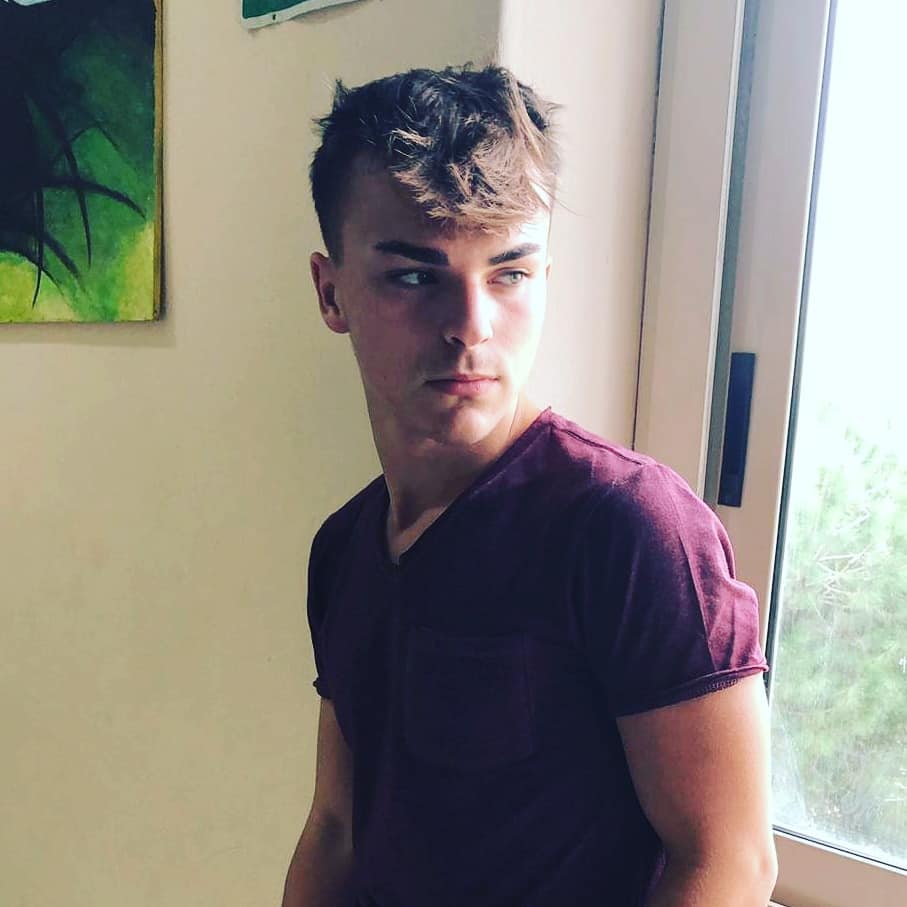
Valerio Zezur, Italian-Ukrainian contemporary artist based in Italy.
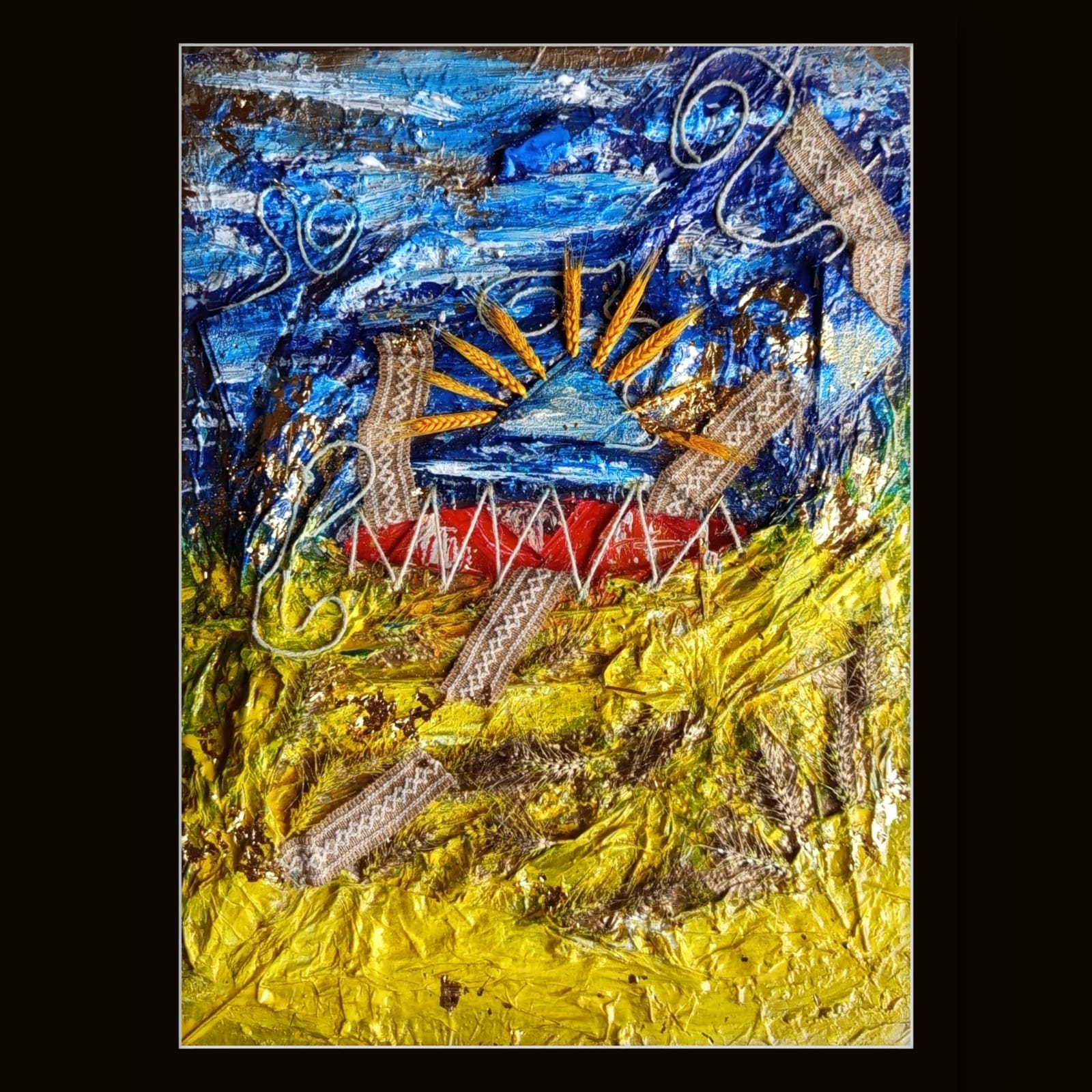
“Ferita Cucita,” mixed media work exploring belonging, memory and reconstruction.
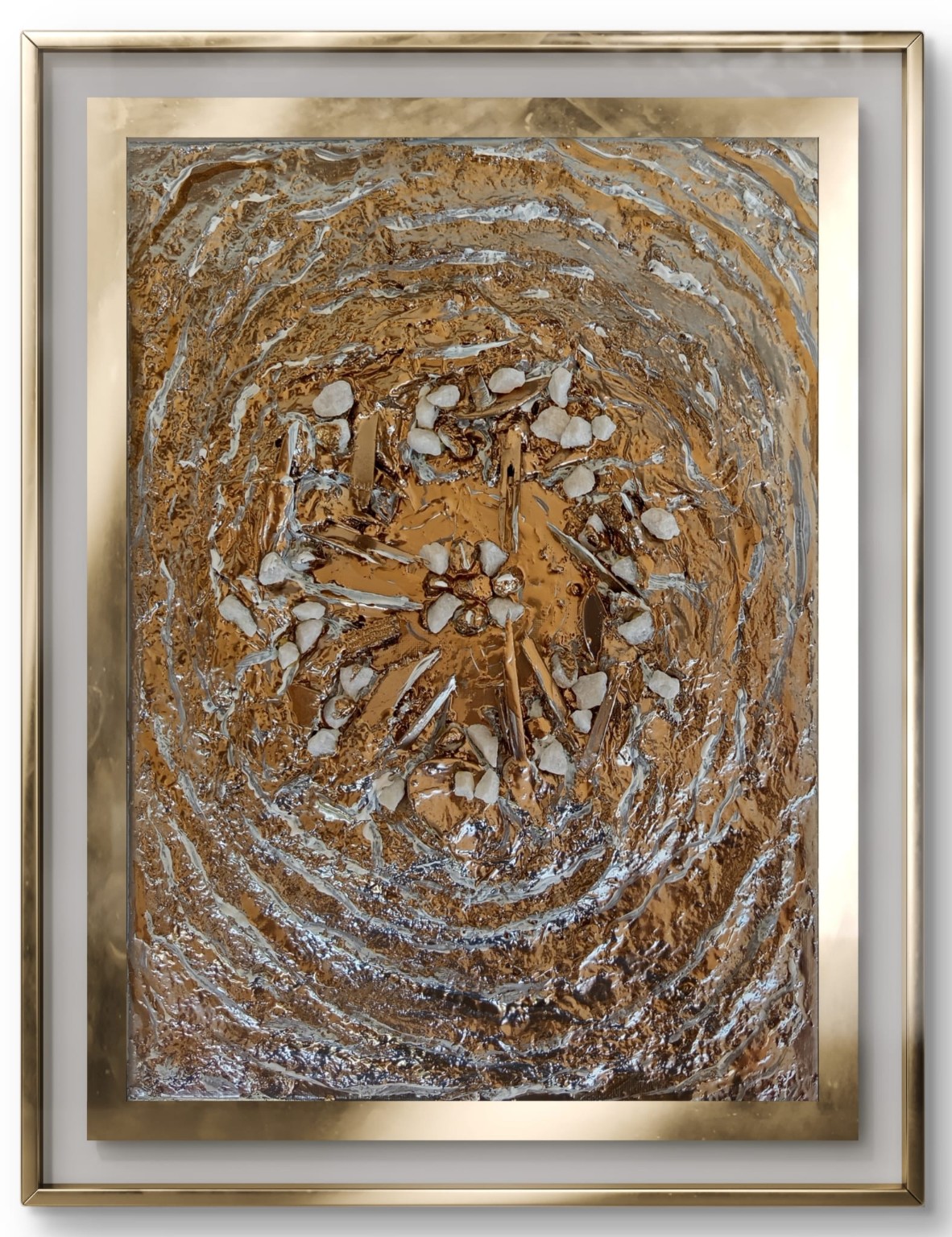
luci di vita di valerio zezur
the reach of the 25-year-old Italian artist’s work as his material practice moves between Italy, Tokyo, Berlin and new interest from Dubai
The memoir offers an entry point into the experiences that shaped Zezur’s practice: childhood in Ukraine, loss, institutional care, migration to Italy and the long reconstruction of identity. Yet the book is not a catalogue of the paintings, and the paintings are not illustrations of the book. The connection lies deeper, in the recurring questions both forms address: what remains after rupture, how memory changes over time, and whether damaged material can carry a different future.
Zezur works primarily through mixed-media and material painting. Acrylic, plaster, sand, fabric, wood, metal, natural elements, recovered materials and gold leaf are built into surfaces that are cut, layered, abraded, stitched and reopened. Rather than conceal irregularity, he leaves it visible. Cracks, fragments and worn materials become part of the structure of the work.
That approach has become increasingly recognizable across a body of work that has been shown in Italy and abroad. Zezur’s exhibition record includes a group exhibition in Tokyo in 2025 and a project in Berlin in 2026, alongside exhibitions and cultural initiatives in Padua, Rovigo, Bosisio Parini, Taglio di Po and other Italian locations. In 2026, he was also among the artists included in Blu Giotto, the collective project in Padua dedicated to the city and its visual identity.
Recent professional interest from the United Arab Emirates, including Dubai, has added a new geography to those conversations. Together with the experiences in Tokyo and Berlin, it points to a practice that is beginning to circulate beyond the local contexts in which it first developed.
At the centre of Zezur’s visual language is the idea that material carries memory. A piece of wood is not neutral once it has been broken. Fabric retains wear. Metal keeps oxidation. Sand and plaster hold traces of handling. He uses those qualities rather than erasing them, allowing the previous life of a material to remain visible inside the finished work.
Gold leaf is one of the most persistent elements in that vocabulary. Zezur often places it near areas of tension, fracture or abrasion. It is not used to smooth over damage or to make the surface appear luxurious. Instead, it draws attention to the place where the work has been broken, altered or rebuilt.
In Ferita Cucita, or Stitched Wound, straw, grain, coarse fabric, rope, metal, plaster and acrylic form a surface crossed by a visible seam. The work brings Zezur’s Ukrainian origins and Italian experience into the same field without forcing them into a seamless identity. The stitch remains visible because the repair is part of the meaning.
Cuore in Frantumi, Oro in Cammino — Heart in Fragments, Gold in Motion — develops the idea differently. Broken wooden elements interrupt the painted surface and are incorporated into a new structure. The fragment is not restored to what it was before; it becomes part of something else.
“I do not paint to represent what I have lived through. I paint to give form to what often cannot be named,” Zezur writes in his artist statement.
That sentence also explains why the memoir matters to the current phase of his work. Inside the Nightmare, Beyond the Darkness gives readers the biographical coordinates, but the strongest paintings are increasingly concerned with what happens after those coordinates are removed. Can a stitched surface speak to someone who knows nothing about the artist’s childhood? Can a fractured object carry meaning without an explanatory label? Can personal memory become a visual language that belongs, for a moment, to the viewer?
Those questions are becoming more central as Zezur’s practice grows. His recent exhibitions and presentations have often brought writing and visual art into the same space, but the two are moving toward greater independence. The book tells the story. The paintings test what remains when the story is no longer being told.
The wider public response to that combination has also expanded the range of audiences encountering his work. Presentations in Italy have brought together readers, collectors, artists and visitors who may not normally enter contemporary art spaces, while international exhibitions have placed the work in different cultural settings. The result is a practice that is still rooted in a specific biography but is increasingly being read through broader themes of memory, belonging, displacement and reconstruction.
At 25, Zezur is entering a period of consolidation rather than reinvention. The materials remain consistent, as do the central concerns. What is changing is the scale of the conversation around them: from local exhibitions to international contexts, from an Italian memoir to an English-language edition, and from personal history to a visual language that is beginning to travel on its own.
Inside the Nightmare, Beyond the Darkness is available in English, while the Italian edition Dentro l’incubo, oltre il buio is available in print, ebook and audiobook formats.
About Valerio Zezur
Valerio Zezur is an Italian-Ukrainian contemporary artist born in 2001 and based in Italy. His practice combines mixed-media painting, material experimentation, natural elements, recovered materials and gold leaf. His work explores memory, identity, fracture and transformation and has been presented through exhibitions and cultural projects in Italy and internationally.
Official website: www.valeriozezur.it
Mirko Giacomin
Zezur Studio Press
press@valeriozezur.it
Visit us on social media:
LinkedIn
Instagram
Facebook
TikTok
video music by valerio zezur "siamo soli"
Legal Disclaimer:
EIN Presswire provides this news content "as is" without warranty of any kind. We do not accept any responsibility or liability for the accuracy, content, images, videos, licenses, completeness, legality, or reliability of the information contained in this article. If you have any complaints or copyright issues related to this article, kindly contact the author above.
